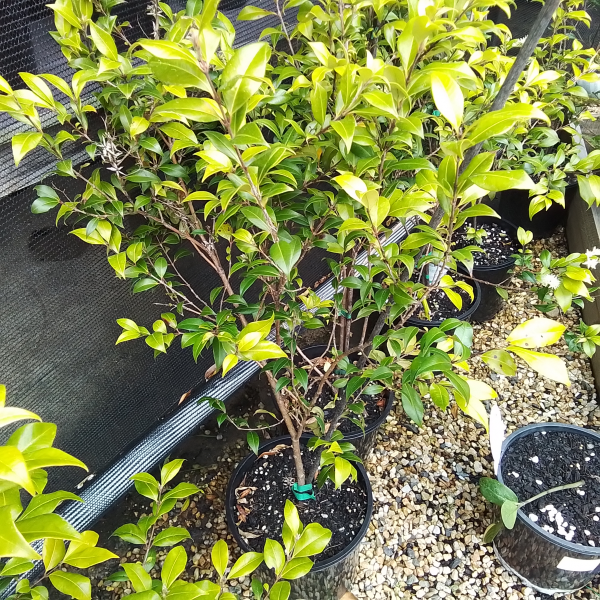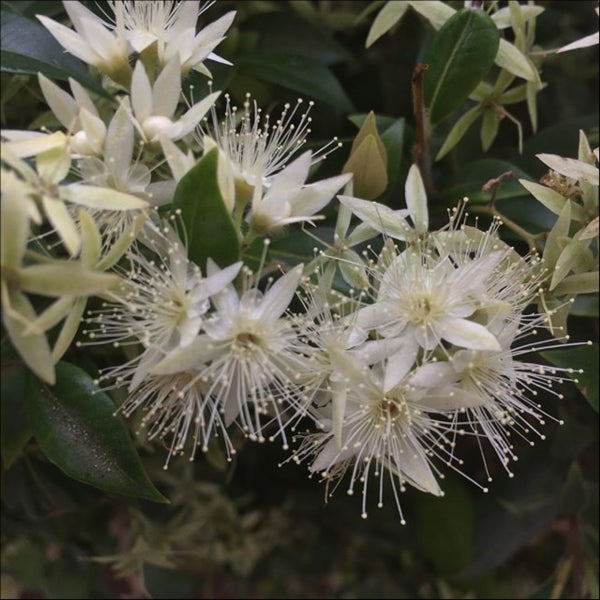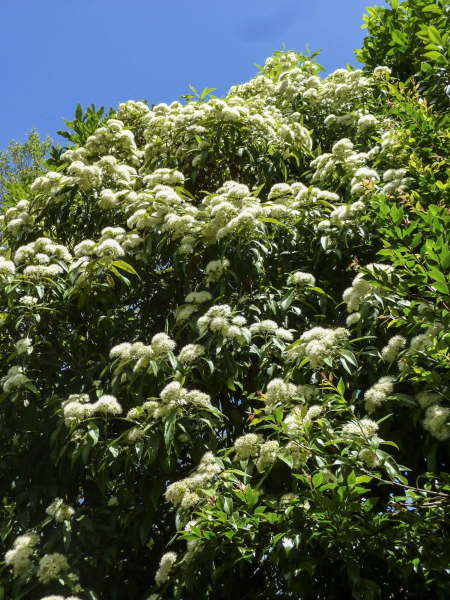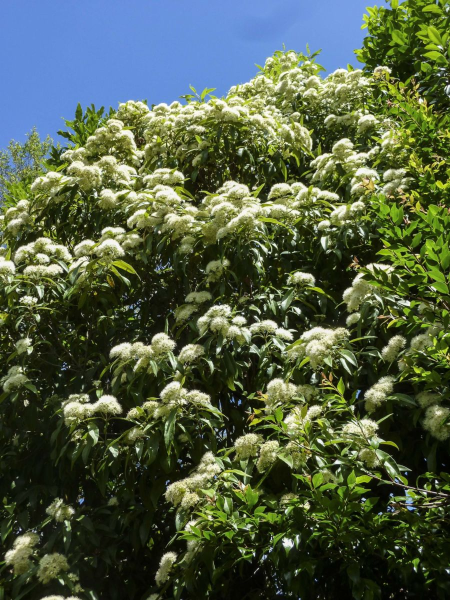
Eucalyptus mannifera Little Spotty
Eucalyptus mannifera Little Spotty Read More »
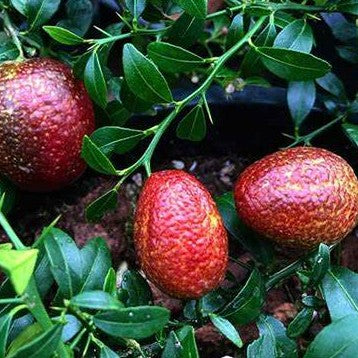
The Red Lime is hybrid between the Australian native finger lime, (Citrus Australasica) and a Burmese Rangpur lime, (Citrus x Limonia). Also known as Red Centre Lime, its actual registered PBR name is Australian Blood Lime.
Citrus australasica Australian Blood PBR Red Centre (finger lime) Read More »
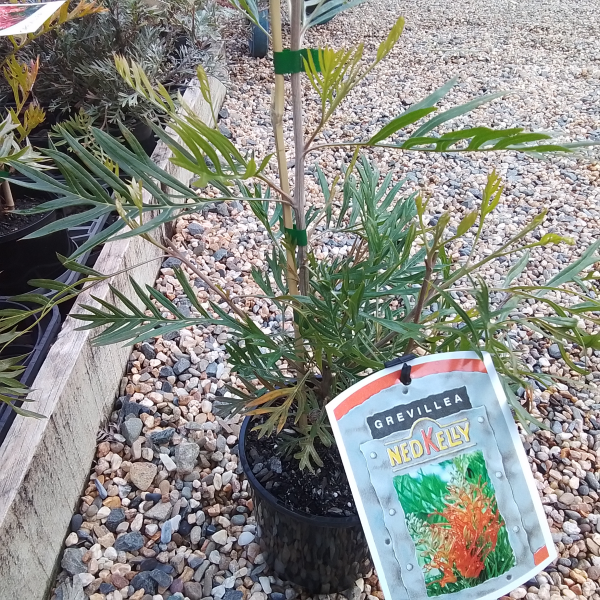
Grevillea ‘Ned Kelly’ is a popular and bright flowering variety of the Grevillea family. Its flowers are an eye-catching blend of orange and red. These flowers attract and feed native birds and bees. It can be maintained as a hedge or screening plant.
Grevillea Ned Kelly 200mm Read More »
Backhousia myrtifolia is known both as the Grey Myrtle and Cinnamon Myrtle. A rainforest tree from Southern Queensland. to New South Wales this is a tree that grows well as far south as Melbourne where it is used in parks and gardens. Small tree to 7mn with slightly weeping branches. Large clusters of creamy white
Backhousia myrtifolia {Tucker Bush – Cinnamon Myrtle} 200mm Read More »
Backhousia myrtifolia is a small rainforest tree species. This tree grows well in most soil and climate conditions, and will tolerate long, dry summers provided it is watered regularly. Grows best in full sun, but can also thrive under part-shade or full shade. Its ovate leaves start out light and bright green when young, but
Backhousia myrtifolia 140mm Read More »
Lemon Myrtle ( Backhousia citriodora ) is an Australian species; that is native to south eastern Queensland. The tree grows naturally in sub-tropical rainforests along the coast. The Lemon Myrtle tree is flowering and evergreen and although it can grow to 20 metres in it’s natural habitat is rarely larger than 5-6 metres tall. Its
Backhousia citriadora 300mm Read More »
Lemon Myrtle ( Backhousia citriodora ) is an Australian species; that is native to south eastern Queensland. The tree grows naturally in sub-tropical rainforests along the coast. The Lemon Myrtle tree is flowering and evergreen and although it can grow to 20 metres in it’s natural habitat is rarely larger than 5-6 metres tall. Its
Backhousia citriadora 200mm Read More »